
Complete Guide to Excavating & Site Preparation in South Carolina

Every successful construction project in South Carolina begins the same way: with the ground. Excavating and site preparation in South Carolina is the unglamorous but critical phase that determines whether everything built afterward stands level, stays dry, and lasts. Get it right and the rest of the project runs smoothly; cut corners and you invite settling, cracking, drainage failures, and expensive repairs down the road. This guide explains exactly what site preparation involves, how the process works, why South Carolina’s soils and regulations make it a specialized job, what it costs, and how to choose a contractor who will build you a foundation you never have to think about again.
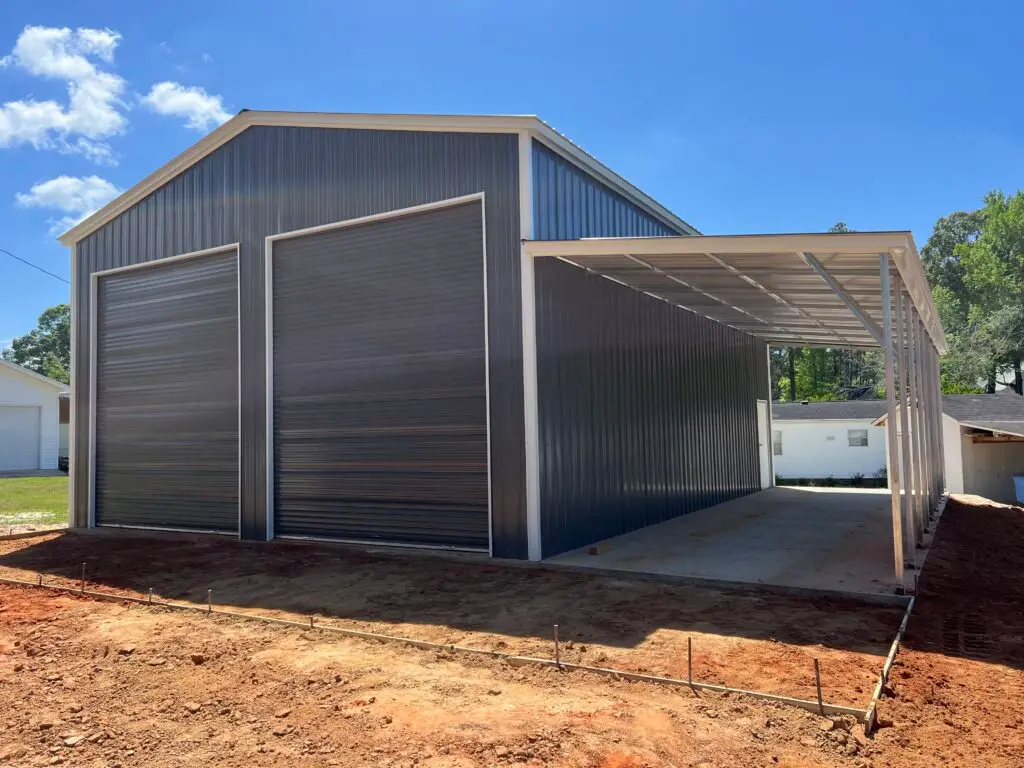
alt: "Steel building constructed in South Carolina by Mychael G. Smith LLC"

What Excavating & Site Preparation Actually Includes

Site preparation is a catch-all term for the sequence of earthwork tasks that turn a raw or cluttered piece of land into a stable, buildable surface. It is far more than “digging a hole.” A complete site prep scope usually covers most or all of the following.

Surveying and Staking

Before any dirt moves, the site is surveyed and staked so the crew knows exactly where the building, grades, and utilities need to go. Accurate layout at this stage prevents costly mistakes later, because every cut and fill depends on hitting the right elevations.

Clearing and Grubbing

Clearing removes trees, brush, and surface vegetation, while grubbing pulls out the roots, stumps, and buried organic material underneath. Leaving organic matter in place is a common shortcut that causes problems, because as roots and debris decompose they create voids and the ground settles unevenly.

Demolition and Removal

When an old structure, slab, or foundation sits where the new build needs to go, it has to come out first. Coordinated demolition and debris removal clears the footprint cleanly so grading can start on solid ground rather than around obstacles.

Earthwork: Cut and Fill

This is the heart of site prep. “Cut” means removing soil from high spots; “fill” means adding and compacting soil in low spots. Balancing cut and fill across the site creates the level, engineered surface the project needs while managing how water will drain once construction is finished.

Soil Compaction

Loose or disturbed soil must be compacted in layers to the density the design requires. Proper compaction is what keeps a slab or foundation from settling later. Skipping it, or rushing it, is one of the leading causes of cracked slabs and shifting foundations.

Drainage and Stormwater Management

Grading is shaped so water moves away from the structure, not toward it. Depending on the site, this can include swales, French drains, retention areas, and tie-ins to stormwater systems. In a state that sees heavy seasonal rain, drainage is not an afterthought; it is central to the whole plan.

Utility Trenching and the Building Pad

Trenches are excavated for water, sewer, electrical, and other utilities, and the final building pad is graded and compacted to precise elevations. Once the pad passes inspection, the site is ready for the foundation.

Why Site Preparation Is the Most Important Phase of Any Build

Handled as one coordinated scope, these steps are the backbone of professional excavation and site preparation services.

It is easy to underestimate site prep because, when it is done well, you never see it again. But everything visible in a finished project — the slab, the walls, the roof — transfers its weight down into the ground the site prep crew shaped. If that ground is uneven, poorly compacted, or badly drained, the problems work their way up. Poor site preparation shows up as settling foundations, cracked slabs and walls, doors and windows that no longer close, water pooling against the structure, and, in the worst cases, flooding. These are not cosmetic issues; they are expensive structural repairs that could have been avoided for a fraction of the cost by preparing the site correctly the first time. South Carolina’s climate raises the stakes. Long, wet seasons and heavy downpours test drainage constantly, and the state’s varied soils behave very differently under load. A site that looks flat and solid in dry weather can turn into a very different problem after the first hard rain if the grading and drainage were not engineered properly. That is why site preparation here rewards local experience over a one-size-fits-all approach.

The Core Principle

You cannot fix a bad foundation by building better on top of it. Site preparation is the one phase where doing it right is dramatically cheaper than doing it over. Every dollar spent getting the ground correct protects every dollar spent on everything above it.

The Site Preparation Process, Step by Step

While every site is different, a professional site prep job generally follows the same logical sequence from raw land to a build-ready pad.

  1. Site Evaluation and Layout – The crew evaluates the land, reviews the plans and any soil information, and stakes out the building footprint, grades, and utility runs. This is also when access, drainage patterns, and potential problem areas are identified.
  2. Clearing and Erosion Control – Vegetation and obstacles are cleared, and — importantly — erosion and sediment controls go in early. Silt fencing, stabilized entrances, and inlet protection are installed before major earthwork so that soil and sediment stay on site rather than washing into streets and streams.
  3. Earthwork and Grading – Cut and fill operations shape the site to the required elevations. Soil is moved, spread, and graded to establish the rough contours that control drainage and support the structure.
  4. Compaction – Fill areas are compacted in controlled layers to the specified density. On larger or engineered projects, compaction is tested to confirm the ground will carry the loads the design calls for.
  5. Drainage and Utilities – Drainage features are installed and utility trenches are excavated and backfilled. Getting drainage right at this stage is what keeps water moving away from the finished structure for the life of the building.
  6. Final Grade and Pad Preparation – The building pad is brought to final grade and compacted to precise elevations, then inspected. Once approved, the site is ready for foundation work to begin.

South Carolina Soil & Terrain: What Makes Site Prep Different Here

One reason site preparation in South Carolina is a specialized job is that the “ground” means something completely different depending on where in the state you are building. A crew that knows how to handle Midlands clay may be caught off guard by a Lowcountry water table, and vice versa. Understanding the local soil is half the job.

Sandhills and Sandy Soils

Parts of the state sit on sandy, well-draining soils. These drain readily but can require careful compaction and, in some cases, stabilization to reliably carry structural loads without shifting.

Lowcountry and Coastal Conditions

Toward the coast — around Charleston, Summerville, and the surrounding Lowcountry — a high water table, poorly drained soils, and nearby wetlands are frequent challenges. Sites here often need extra attention to dewatering, fill, and drainage, and they fall under stricter coastal stormwater rules. Our work as a general contractor in Charleston, SC and throughout Summerville means we plan for those conditions from the start.

The Pee Dee Coastal Plain

In the Pee Dee region around Florence, flatter, sandier coastal-plain ground and extensive agricultural land bring their own drainage and grading considerations, especially for larger commercial and agricultural pads.

The takeaway is simple: the right approach to a site in one part of South Carolina can be the wrong approach in another. Local knowledge of how the ground actually behaves is what separates a pad that lasts from one that fails.

Permits, Stormwater & Erosion Control in SC

Land disturbance in South Carolina is regulated, and this is another area where out-of-state operators and inexperienced crews get projects into trouble. Understanding the rules — and building them into the schedule — is part of doing site prep correctly.

The State Stormwater Permit

Activities like clearing, grading, and excavating fall under South Carolina’s construction stormwater program, administered by the South Carolina Department of Environmental Services (SCDES) under the federal NPDES framework. In general, any project that disturbs one acre or more needs coverage under the state’s Construction General Permit, which means filing a Notice of Intent and preparing a Stormwater Pollution Prevention Plan (SWPPP) before work begins.

Larger and Coastal Projects

Sites that disturb two acres or more require a comprehensive stormwater plan prepared by a licensed professional — a South Carolina engineer, landscape architect, or qualified surveyor — along with regular documented inspections during construction. Even sites under an acre can trigger requirements if they are part of a larger development. And in the eight coastal counties, which include Charleston, Berkeley, and Dorchester right in our service area, projects also need a coastal zone consistency review with heightened design standards.

Why It Matters on the Ground

Two practical points matter most for property owners. First, you generally cannot begin land-disturbing work until your permit coverage is approved; breaking ground early can bring stop-work orders and fines. Second, compliance is not just paperwork — it means real erosion and sediment controls installed before earthwork and maintained throughout the job, so soil stays on your site and out of the waterways. A contractor who handles this routinely keeps your project legal and on schedule instead of stalled at the permit office.

What Affects the Cost of Excavation & Site Preparation

There is no flat rate for site prep, because the work is driven entirely by the land. Two lots the same size can cost very different amounts depending on what the ground demands. These are the biggest cost factors.

Size and Slope

Larger sites and steeper, more uneven terrain require more earthmoving and more careful grading. A flat lot is far cheaper to prepare than a sloped one that needs significant cut and fill to reach a level pad.

Soil and Rock Conditions

Soil type has a major impact. Heavy clay, unstable soils, a high water table, or buried rock all add time and cost. Rock in particular can require special equipment to break and remove.

Clearing and Removal

A wooded lot full of trees and stumps costs more to clear than an open field. Hauling away cleared material, old structures, or excess soil — and importing fill when the site needs it — adds to the total.

Drainage and Access

Complex drainage requirements increase cost, as does a site that is hard for equipment to reach. Tight or remote access can slow the whole operation down.

Permits and Site Conditions

Permitting, required stormwater plans, and inspections factor in, especially on larger or coastal projects. A reputable contractor evaluates the site up front and gives you an estimate that reflects the actual conditions rather than a guess.

How to Compare Site Prep Bids

Make sure competing quotes cover the same scope. A low bid that leaves out clearing, haul-off, drainage, permits, or compaction testing is not cheaper — it just defers those costs. The most useful number is a complete estimate based on an actual site evaluation, not a per-acre average.

Common Site Prep Challenges in South Carolina

Experience shows up when a site does not cooperate. These are some of the challenges that come up most often on South Carolina projects, and how professionals handle them.

Wet sites and high water tables. Common toward the coast, these require dewatering, proper fill, and drainage design so the pad stays stable. Heavy clay. Midlands clay needs careful moisture management and drainage to control shrink-swell behavior. Stumps and buried debris. These must be fully removed, not buried, to prevent settling as they decompose. Old structures and slabs. Existing construction has to be demolished and cleared before grading can begin. Poor drainage. Sites that hold water need engineered grading and drainage features to move water away from the building for good.

None of these are unusual, but each one punishes inexperience. A crew that has solved them across many South Carolina sites plans for them before they become expensive surprises.

How to Choose an Excavating Contractor in SC

The contractor you hire for site prep sets the ceiling for everything built afterward. Here is what actually matters when you choose one.

Local Experience and the Right Equipment

Look for a contractor who has prepared sites like yours in your part of the state and owns the equipment to do the work efficiently. Local experience means they already understand the soils, drainage, and permitting you will be dealing with.

Licensing and Stormwater Know-How

Confirm the contractor is properly licensed and insured, and that they understand South Carolina’s stormwater and erosion-control requirements. A contractor fluent in the permitting process keeps your project compliant and moving. You can verify a contractor’s state license through the South Carolina Contractor’s Licensing Board.

Turnkey Coordination

The smoothest projects happen when site prep, foundation, and construction are coordinated by one accountable team. When the same contractor prepares the ground and builds on it — as with steel building installation — there is no gap between the site work and the structure, and no one to point fingers if something needs adjusting.

For more on how site prep fits into a larger build, our guide to steel buildings in South Carolina walks through how the foundation phase connects to the finished structure.

Serving Excavation & Site Prep Across South Carolina

Based in Sumter, Mychael G. Smith LLC has prepared sites across the Midlands, the Pee Dee, and the Lowcountry since 1994. Our two-hour service radius covers a large share of the state, and because we work in each of these areas regularly, we know how the ground and the rules change from one region to the next.

We handle excavation, grading, drainage, and full site preparation in Sumter, Columbia, Florence, Manning, Orangeburg, and Santee, along with Charleston, Summerville, and the surrounding coastal communities. Each region brings its own soil, drainage, and permitting realities, and that firsthand familiarity is exactly what keeps projects on schedule and out of trouble. Whether you are preparing a pad for a commercial building, an agricultural structure, or a residential project, the goal is the same: a stable, well-drained, build-ready site.

Excavating and site preparation in South Carolina is not work you want to hand to whoever happens to be cheapest and furthest from the job. The ground here is too variable and the consequences of getting it wrong are too expensive. Choosing a contractor who prepares sites in these regions week in and week out — and who can carry the project past site prep and straight into construction — is the surest way to protect your investment from the ground up and avoid the costly problems that trace back to a rushed foundation.

Excavating & Site Preparation in SC: FAQs

What is the difference between excavation and site preparation?
Excavation is one part of site preparation. Excavation refers specifically to moving earth — digging, cutting, and filling — while site preparation is the full process of turning raw land into a build-ready surface, including clearing, grading, compaction, drainage, erosion control, and utility work. Excavation is a step within the larger site prep job.
It depends on the size and condition of the site. A small, flat, open lot might be prepared in a few days, while a large or wooded site with drainage challenges, rock, or significant grading can take considerably longer. A site evaluation is the only reliable way to estimate the timeline for your specific project.
Often, yes. Projects disturbing one acre or more generally require coverage under the state’s construction stormwater permit before work begins, and smaller or coastal sites can trigger requirements too. A licensed contractor familiar with SCDES requirements will handle this so you do not break ground prematurely.
Compaction gives the ground the density it needs to carry the weight of the structure without settling. Poorly compacted fill is a leading cause of cracked slabs and shifting foundations, so compacting soil in controlled layers — and testing it on engineered projects — protects everything built on top.
The problems surface later as settling foundations, cracked slabs and walls, doors and windows that stick, water pooling against the structure, and drainage failures. These are expensive structural repairs, which is why doing site prep correctly the first time is far cheaper than fixing it afterward.
Yes. Clearing wooded lots and demolishing and removing old structures or slabs are standard parts of site preparation. The key is fully removing stumps, roots, and debris rather than burying them, so the ground does not settle as buried material breaks down.
There is no flat rate, because cost is driven by the land — size, slope, soil and rock conditions, clearing and haul-off, drainage complexity, access, and permitting all factor in. The most reliable figure comes from an on-site evaluation rather than a per-acre average.
It is usually the better approach. When one contractor handles both, the site work and the structure are coordinated as a single project, which avoids gaps between crews and keeps accountability in one place from the ground up.

Ready to Plan Your Next Profect?

Mychael G. Smith LLC handles steel building installation, excavation, and full-service construction across South Carolina. Licensed since 1994 and built on three decades of local experience. Get a free, no-obligation quote on your project.

Get A FREE Quote

Get a free quote on steel buildings, excavation, demolition, or any of our services.
