
Steel Buildings in South Carolina: What You Need to Know
Your complete guide to building types, costs, permitting, and choosing a licensed South Carolina contractor — from a general contractor serving the state since 1994.
If you are weighing your options for steel buildings in South Carolina, you are looking at one of the most practical, durable, and cost-effective ways to add usable space to a property anywhere in the Palmetto State. From commercial warehouses in Columbia to agricultural barns outside Sumter and storage facilities near the coast, pre-engineered steel and metal buildings have become the default choice for owners who want strength, speed, and long-term value. This guide walks through the building types, the costs, the permitting and code realities specific to South Carolina, and how to choose a licensed contractor who will get the job done right the first time.
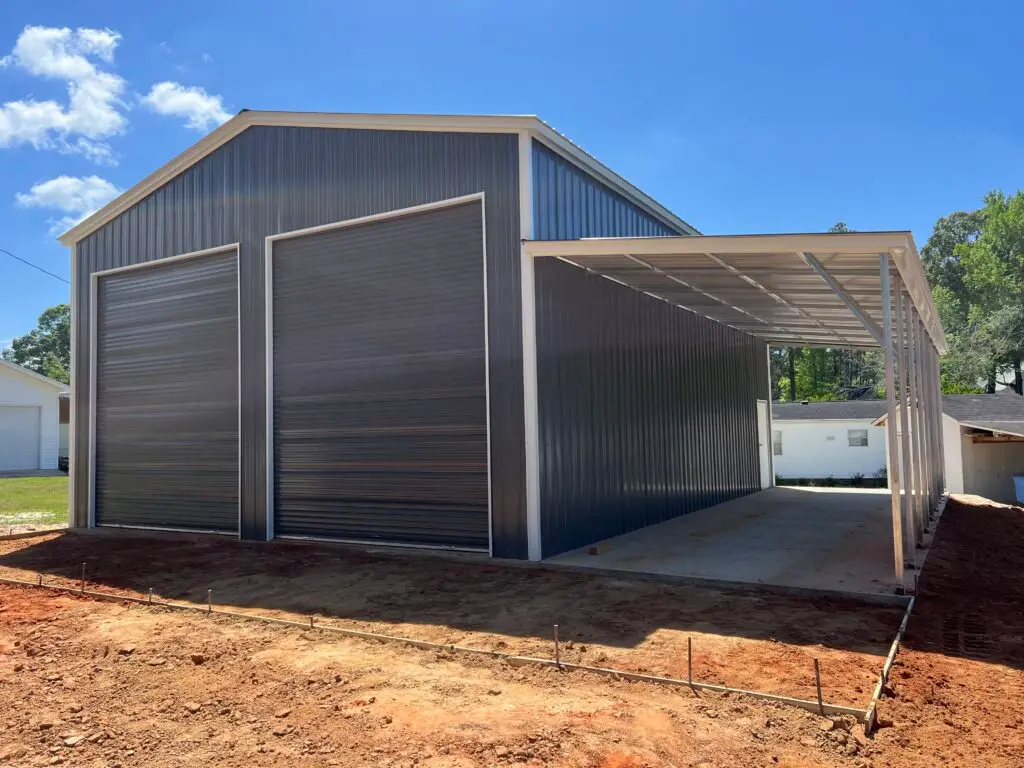
Why Steel Buildings Make Sense in South Carolina
South Carolina’s climate is hard on buildings. Long, humid summers, heavy seasonal rain, the constant threat of tropical storms and hurricane-force winds along the coast, and year-round termite pressure all take a toll on traditional wood-frame construction. Steel buildings in South Carolina are engineered to handle exactly these conditions, which is a large part of why they have grown so popular with farmers, business owners, and homeowners across the state.
Built for the Climate
Pre-engineered metal buildings are designed and stamped to meet the specific wind and load requirements of your location. That matters a great deal here: a building going up near Charleston or along the coast must be engineered for far higher wind loads than one in the Midlands. Steel does not warp, rot, or feed termites, and a properly coated metal building shrugs off the humidity that causes wood to swell and mold. The result is a structure that holds up for decades with very little maintenance.
Lower Cost, Faster Build
Compared with conventional construction, a steel building usually costs less per square foot and goes up far faster. Because the frame arrives pre-cut, pre-drilled, and ready to assemble, the labor hours on site drop dramatically. A project that might take months in brick or block can often be enclosed in a matter of weeks. For a business that needs to be operational quickly, or a property owner who wants to limit labor costs, that speed translates directly into savings.
Versatility and Expansion
A steel building is essentially a clear-span shell you can finish however you like. The same basic structure can become a workshop, a retail storefront, a climate-controlled warehouse, an equipment barn, or a residential garage with an apartment above it. Clear-span designs leave the interior free of support columns, giving you wide open floor space. And because the framing is modular, expanding the footprint later is far simpler than adding onto a traditional building.
The Short Version
Steel buildings in South Carolina win on four counts: they stand up to the state’s heat, humidity, and storm exposure; they cost less and build faster than conventional construction; they are low-maintenance and termite-proof; and they adapt to almost any commercial, agricultural, or residential use. The keys to a good outcome are correct engineering for your local loads, proper site preparation, and a licensed contractor who manages the whole process.
Common Types of Steel Buildings
Commercial and Retail Buildings
Industrial and Warehouse Facilities
Garages, Workshops, and Storage
Specialty Structures
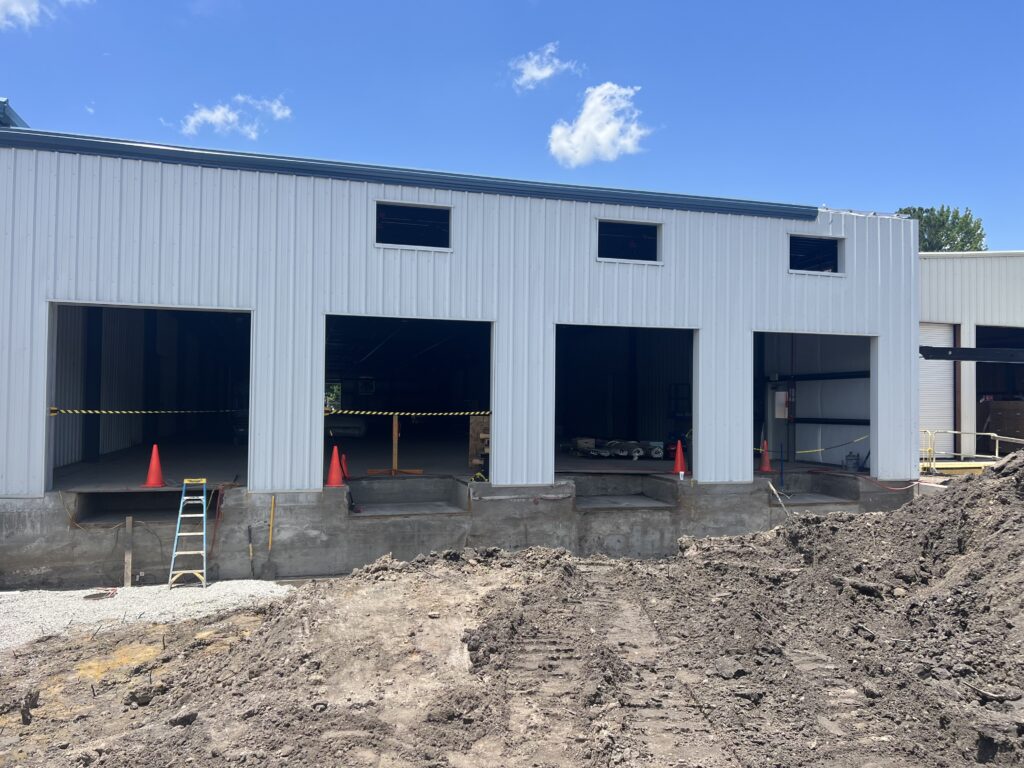
Whatever the use, the foundation of a successful project is professional steel building installation that covers everything from the slab to the final panel. A turnkey contractor handles the engineering, site work, and erection as one coordinated job rather than leaving you to juggle separate crews.
How a Steel Building Project Works in SC
1. Planning and Design
Every project starts with defining the use, the size, and the features you need: door openings, eave height, insulation, windows, and so on. From there the building is engineered to your specifications and to the wind and load requirements for your exact location. In South Carolina that engineering step is not optional paperwork; it is what makes the building legal and safe to occupy.
2. Permitting and Code Approval
Before ground is broken, the project needs the proper permits from the local authority having jurisdiction, whether that is a county building department or a municipal office. South Carolina enforces statewide building codes based on the International Building Code and International Residential Code, with wind-load provisions that get stricter as you move toward the coast. Stamped engineering drawings are typically required as part of the permit submission.
3. Site Preparation and Excavation
A steel building is only as solid as the ground it sits on. Site work includes clearing, grading, soil compaction, and drainage so the pad is level, stable, and ready for concrete. Skipping or shortcutting this step is one of the most common causes of long-term problems. Professional excavation and site preparation sets the stage for everything that follows. When an existing structure has to come down first, controlled demolition and debris removal clears the site cleanly before grading begins.
4. Foundation and Concrete
5. Delivery and Erection
What Affects the Cost of a Steel Building
Size and Design Complexity
Steel Prices and Building Gauge
Steel is a commodity, so material pricing shifts with the market. Heavier-gauge framing and higher-strength designs cost more up front but may be required by your engineering and load specifications. The grade of steel and the warranty on the framing and paint finish also factor in.
Foundation and Site Conditions
Site work is where budgets often surprise owners. A flat, well-drained lot with good soil is inexpensive to prepare. A sloped site, poor soil, a high water table, or the need to remove an old structure adds excavation, fill, compaction, and concrete cost. This is why a site evaluation early in the process is so valuable.
Insulation, Finishes, and Accessories
Insulation, interior finishing, climate control, custom doors, windows, skylights, gutters, and exterior facade treatments all add to the base shell price. A bare storage shell and a finished, insulated, climate-controlled office are very different projects even at the same square footage.
Permits, Engineering, and Delivery
A Word on Quotes
Permitting, Codes, and Licensing in SC
Building Codes and Wind Loads
Contractor Licensing
For commercial construction in South Carolina, the contractor must be licensed by the state. The South Carolina Contractor’s Licensing Board, part of the Department of Labor, Licensing and Regulation, regulates general and mechanical contractors and oversees the exams, applications, and license classifications. General contractors must demonstrate relevant experience, meet financial requirements tied to the size of jobs they can take on, pass the required exams, and carry the proper bonding and insurance.
Pre-Engineered Metal Building Classifications
South Carolina even recognizes a specific license classification for pre-engineered metal buildings within certain size limits, alongside the broader general contractor license that covers full-scale construction. The practical takeaway for an owner is simple: confirm that whoever builds your project holds the appropriate license for the work, and verify it is active. You can look up any contractor’s license status directly through the state licensing board.
Because Mychael G. Smith LLC is a licensed South Carolina general contractor that has worked across the region since 1994, the entire project — engineering coordination, permitting, site work, and construction — stays under one accountable roof. You can learn more about our background and approach or reach out through our contact page with questions about your specific location.
How to Choose a Steel Building Contractor
The contractor you pick has more impact on the outcome than almost any other decision. A great building from a kit supplier can still turn into a headache if it is poorly sited, badly anchored, or erected by an inexperienced crew. Here is what to look for.
Local Experience and a Verifiable License
Choose a contractor who knows South Carolina’s codes, permitting offices, and soil and weather conditions firsthand, and confirm that their state license is active and appropriate for your project. Local experience means fewer surprises and a smoother path through the permit office.
Turnkey Capability
A turnkey contractor handles site prep, foundation, and erection as one coordinated project. That single point of accountability is worth a great deal compared with stitching together a kit supplier, a separate excavation crew, and a concrete contractor who have never worked together. When one company owns the whole job, there is no finger-pointing if something needs to be corrected.
A Track Record You Can See
Ask to see completed projects similar to yours, ask for references, and confirm the company carries proper insurance. A contractor with decades of work in the area and a portfolio of finished buildings gives you a realistic picture of what to expect.
Clear Communication
Finally, pay attention to how a contractor communicates during the quoting stage. Clear, direct answers and a detailed scope of work early on usually predict how the project itself will run. Vague quotes and slow responses tend to forecast vague, slow projects.
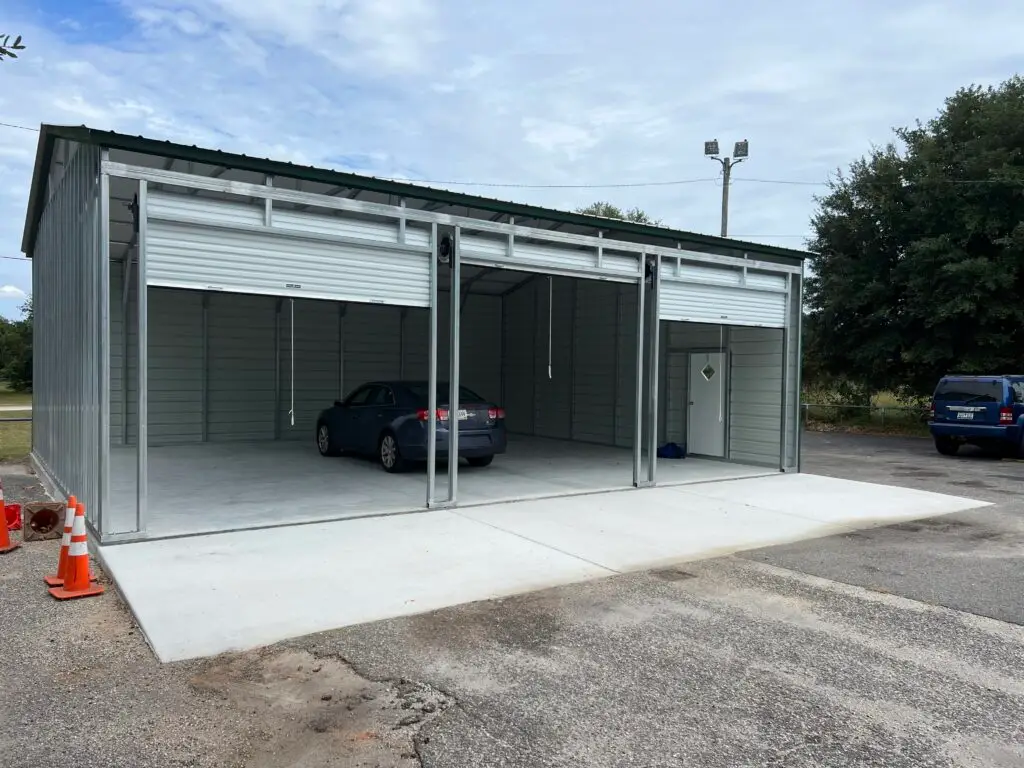
Building Across the South Carolina Service Area
Based in Sumter, Mychael G. Smith LLC serves a roughly two-hour radius that covers a large share of the state. That local footprint means faster response times, firsthand knowledge of each area’s permitting and conditions, and the ability to manage projects from start to finish without long-distance logistics.
That range matters more than it might seem. A national kit company can ship you a building, but it cannot stand in front of your local permit office, evaluate your soil, or send a crew back out if something needs attention after the job is done. Working with a contractor whose home base sits in the middle of the region you are building in keeps every part of the project — the quote, the engineering coordination, the site work, and the build — connected to one accountable team that already knows how construction gets done across the Midlands and toward the coast.
We regularly take on steel building, excavation, demolition, and full-service construction work in Sumter, Columbia, Florence, Manning, Orangeburg, and Santee, as well as the coastal communities. For projects in the Lowcountry, our team handles construction as a general contractor in Charleston, SC, and we provide the same turnkey steel building and construction services in Summerville. Each of these areas carries its own permitting offices and, near the coast, its own wind-load requirements, and our familiarity with those details keeps projects moving.
Not sure whether your location falls inside our service area? It is worth a quick call. We are happy to talk through your project, your site, and what is involved before you commit to anything.
Steel Buildings in SC: Frequently Asked Questions
How much does a steel building cost in South Carolina?
How long does it take to build a steel building?
Do steel buildings hold up to hurricanes and high winds?
Do I need a permit for a steel building in South Carolina?
Does the contractor need to be licensed?
What kind of foundation does a steel building need?
Can a steel building be insulated and climate controlled?
Can I expand a steel building later?
Yes. The modular nature of pre-engineered steel makes expansion far simpler than adding onto conventional construction. If future growth is likely, mentioning it during the design phase lets the building be planned with expansion in mind.
Planning a Steel Building in South Carolina?
- Licensed, insured, and trusted since 1994
